
If you’re planning a new driveway, patio, or walkway in Utah, you’ve probably heard this advice: “Just pour concrete. It’s cheaper.”
At first glance, that sounds right. Concrete usually costs less to install upfront than pavers. But upfront cost and true cost are not the same thing—especially in Utah’s climate. When you look at what happens over 10–20 years, poured concrete often ends up costing homeowners more.
Let’s break it down simply.
Why Utah Is Hard on Concrete
Utah has a rough combination of conditions for outdoor surfaces:
-
Freezing winters
-
Hot, dry summers
-
Snow melt and ice
-
De-icing salts
-
Expanding and shifting soil
Concrete is rigid. It does not flex. When water gets into small cracks and freezes, it expands. Over time, those cracks get bigger. This is why you often see cracking, flaking (spalling), uneven slabs, and permanent stains. Once concrete cracks, it cannot truly be repaired; it can only be patched or replaced.
Upfront Cost: Concrete vs. Pavers
Let’s talk about the starting price between these two popular options.
Poured Concrete
-
Lower upfront installation cost.
-
Faster to install.
-
Looks clean and uniform at first.
Pavers
-
Higher upfront cost.
-
More labor-intensive installation.
-
Significant variety in design and color options.
This is where many homeowners stop comparing, but this is also where the financial mistake happens.
Maintenance Costs Over Time
Concrete almost always needs ongoing maintenance to slow down inevitable damage. Typical concrete maintenance includes:
-
Crack repairs and filling.
-
Resealing every few years.
-
Surface patching.
-
Full replacement when damage spreads.
Even with good maintenance, concrete usually shows visible wear within 5–10 years in Utah. Pavers work differently.
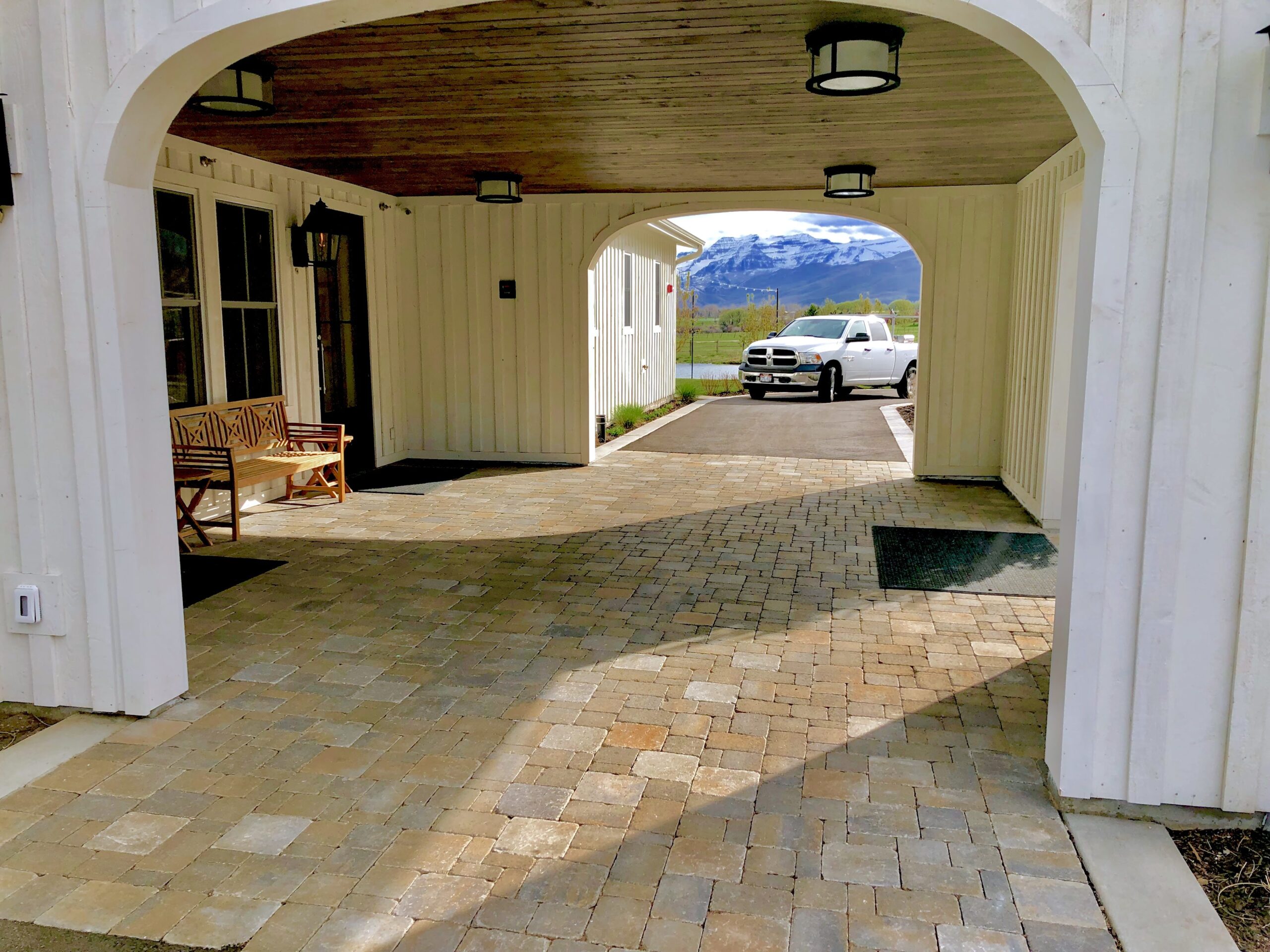
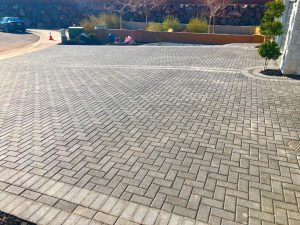
Because they are individual units, paver systems flex with ground movement, allow water to drain properly, and do not crack as a whole surface. If a single paver is damaged, you replace one piece, not the entire driveway.
The 20-Year Cost Difference
Here’s the part most homeowners don’t see coming. Over a 20-year span, the costs look very different:
-
Concrete: Often includes multiple repairs, cosmetic deterioration, and eventually one full replacement. That replacement alone can cost as much—or more—than the original install.
-
Pavers: Typically include minimal maintenance, an occasional joint sand refresh, and individual paver replacement if needed. There is no full tear-out and no starting over.
When you add it all up, pavers often cost less over time, even though they cost more on day one.
Appearance and Property Value
Concrete almost always looks worse as it ages. Cracks, discoloration, and uneven slabs are hard to hide. Stamped concrete can look especially bad once it starts failing because the cracks stand out even more against the pattern.
Pavers tend to:
-
Keep their appearance much longer.
-
Fade evenly instead of cracking.
-
Add significant visual detail and texture.
This matters if you ever sell your home. Outdoor hardscaping is one of the first things buyers notice, and a high-quality paver installation directly impacts curb appeal.
Repairs: Small Fix vs. Big Problem
This is one of the biggest functional differences.
-
If concrete cracks: The crack stays, the repairs are visible, and the damage spreads over time.
-
If a paver gets damaged: It is lifted and replaced, the repair blends in perfectly, and the rest of the surface stays intact.
That flexibility is why pavers are better suited for Utah’s intense freeze–thaw cycles and shifting soil.
The Bottom Line: Which Is the Better Financial Choice?
If you’re only looking at the cheapest upfront option, concrete may seem appealing. But if you’re planning to stay in your home, care about long-term value, or don’t want to redo your driveway in 10–15 years, pavers usually make more financial sense.
Before you pour, it’s worth understanding what you’re really paying for in the long run. If you’re deciding between the two, the smartest move is to look past the first invoice and think about the next 20 years.